The global children’s footwear market is expanding, but the numbers require careful reading. Grand View Research estimates the market will continue growing through 2030, driven by sports participation, online retail, and rising interest in comfortable everyday shoes. Statista also reports strong demand for athletic footwear among younger consumers, especially in urban and digitally connected markets. These trends make China an important sourcing base for Childrens Sneakers.
Yet supplier selection is not only about factory scale or low prices. Product testing, material traceability, sizing consistency, and children’s foot comfort matter more than a polished catalogue. As pediatric podiatrist Dr. Tracy Byrne explains, “Children’s feet are growing and changing, so footwear must support movement rather than restrict it.” This principle should guide every supplier comparison.
China’s leading manufacturers vary widely. Some specialize in school sneakers, while others focus on lightweight running shoes, vegan materials, or private-label production. Their export experience also differs. A supplier may show impressive samples but offer weak quality control during mass production. That is the uncomfortable part.
This guide examines China’s top ten kids’ sneaker suppliers through practical criteria, including production capacity, customization, certifications, inspection systems, minimum order quantities, and communication reliability. The ranking is not absolute. Buyer needs differ. A small retailer may value flexibility, while a global brand may prioritize automation and stable monthly output. This comparison aims to make that decision clearer, not pretend that one factory fits every market.
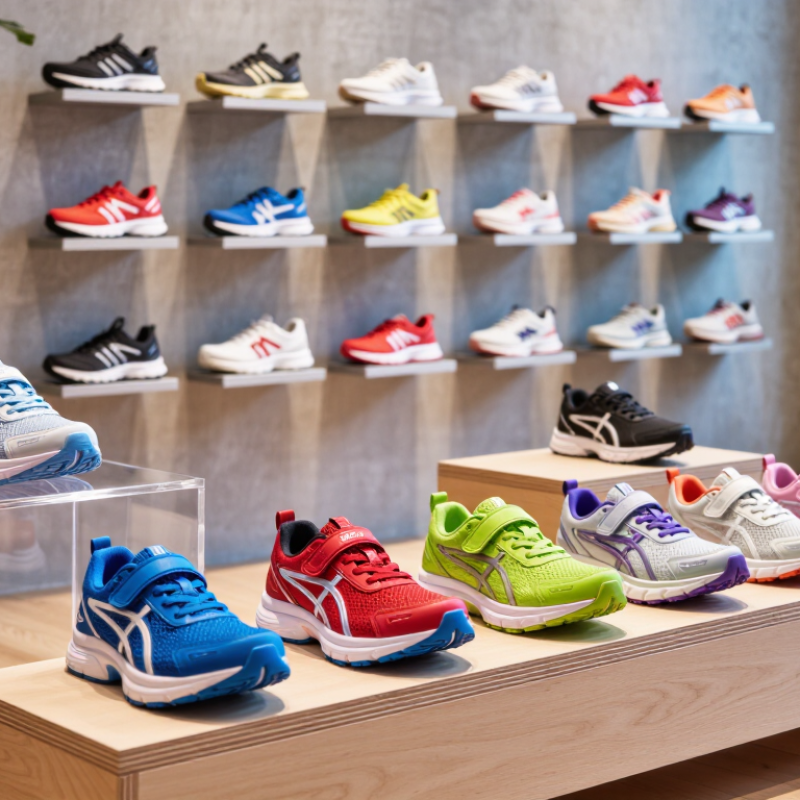
China’s kids’ sneaker supply base remains closely tied to the country’s wider footwear industry. The World Footwear Yearbook 2024 estimates that China produced about 12 billion pairs in 2023. It also reports roughly 9 billion exported pairs, keeping China among the largest global footwear sources. These figures include adult and children’s footwear, so they do not measure kids’ sneakers alone. That limitation matters.
The General Administration of Customs of China recorded strong footwear export activity in 2023, despite weaker consumer demand in several markets. For buyers researching China’s top ten kids’ sneaker suppliers, production scale is only one signal. Factory audits should check children’s sizing, outsole flexibility, stitching strength, material traceability, and testing records.
A small workshop can sometimes offer better attention to detail. It may also have weaker quality controls. Both statements can be true.
Export data also show why supplier selection needs regional and product-level research. Manufacturing clusters in coastal provinces often provide dense access to material vendors, mold makers, testing services, and export logistics. The China Chamber of Commerce reports that footwear exporters increasingly focus on product quality and compliance documentation. Yet public rankings rarely reveal factory-level performance. Buyers should request recent inspection records, sample approval files, and shipment references. Statistics describe the market. They do not guarantee every pair.
Ranking China’s top 10 kids’ sneaker suppliers requires more than comparing online catalogs. Capacity should be verified through factory visits, production records, and peak-season staffing. Check whether a supplier can produce 50,000 pairs monthly without delaying smaller orders. Inspect cutting tables, stitching stations, sole-bonding equipment, and warehouse space. A large facility is not always efficient.
MOQ reveals flexibility. A supplier requesting 3,000 pairs may suit national retailers, while a 300-pair MOQ supports testing new designs. Compare pricing at different quantities, sample fees, mold charges, and replenishment speed. Certifications should carry equal attention. Review current certificates, testing reports, audit dates, and product scope. Confirm that materials, children’s sizes, and production sites match the documents. Missing details matter.
Tips: Create a scorecard with 40% capacity, 30% MOQ flexibility, and 30% certification reliability. Request production photos, recent inspection records, and two customer references. Test samples for stitching strength, odor, sole grip, and size accuracy. Ask for corrective-action records when defects appear. Suppliers that explain problems clearly may deserve more trust than those promising perfection. A perfect ranking is unlikely. Seasonal labor, material shortages, and rushed samples can distort results. Recheck the top candidates before signing a purchase agreement.
A practical top-ten shortlist should compare factories by capability, not only online popularity. Suppliers in Fujian often produce school sneakers, running shoes, and lightweight court styles. Guangdong factories commonly offer flexible custom designs and fast sample development. Zhejiang suppliers are strong in canvas shoes and casual children’s footwear. Jiangsu and Shandong factories may focus on molded soles, sports construction, and larger production runs.
Most suppliers use mesh, knitted polyester, microfiber, canvas, rubber, EVA, and recycled materials. Mesh improves airflow, while EVA reduces weight and shock.
Rubber gives better grip but can increase the final price. Typical FOB prices range from 6 to 18 US dollars for standard models.
Custom colors, reinforced toes, printed insoles, and special packaging may raise prices to 22 dollars or more. Production usually takes 25 to 45 days after sample approval. This varies during peak seasons. Factory capacity is not always consistent.
Request a physical sample, material specification, and recent production photos. Check sole bonding, stitching, odor, size accuracy, and pull strength. Ask whether the quoted price includes packaging and testing. A factory visit or independent inspection adds useful evidence. Do not trust the lowest offer immediately. It may exclude essential details. Small mistakes happen, even with experienced suppliers. Keep written records of approved colors, measurements, and tolerances. That simple step prevents expensive misunderstandings.
When comparing China’s top ten kids sneakers suppliers, factory verification should guide the shortlist. BSCI participation can indicate social compliance, but it is not a product safety certificate. Ask for the audit report, factory address, audit date, and coverage scope. Confirm that the document matches the actual production site.
ISO 9001 shows a structured quality management system. It does not guarantee every sneaker is safe or durable. During a factory visit, inspect incoming materials, stitching lines, glue storage, and final inspections. Review records for size accuracy, outsole bonding, color consistency, and defect handling. Small details matter. A clean sample room means little if production controls are weak.
Children’s footwear safety testing needs closer attention. Request current reports for lead, restricted chemicals, azo dyes, phthalates, migration, slip resistance, and small detachable parts. Check whether the tested materials match the proposed upper, lining, insole, and outsole. Testing only one color may leave gaps. I once treated a valid report as complete evidence, but the report covered an older material batch. That mistake changed my review process. Suppliers should also explain traceability, corrective actions, and retesting procedures. Clear answers are valuable. Vague promises are not. A practical supplier can provide samples, production records, inspection photos, and third-party test documents without hesitation.
China’s top ten kids’ sneaker suppliers differ sharply in lead time, customization, and export reach. Ready-stock suppliers usually ship within 7–15 days after payment. Standard OEM orders often require 30–45 days. New molds can extend production beyond 60 days. These estimates depend on material availability, factory capacity, and approval speed.
Customization is rarely unlimited. Several suppliers support custom colors, woven labels, printed insoles, packaging, and size grading. More experienced factories can develop lightweight soles, breathable mesh uppers, and reinforced toe caps for active children. Sample development commonly takes 7–12 days, although revisions may add another week. Ask for a physical sample, material specifications, and a pre-production inspection. Photos alone can hide uneven stitching or stiff edges.
Export capability also separates the group. Some suppliers regularly serve North America and Western Europe, while others focus on Southeast Asia, the Middle East, or Latin America. Suppliers with broader export experience usually understand carton markings, documentation, and destination-specific testing expectations. However, market claims need verification. Request recent shipment references, factory audit records, and clear production terms. A lower price may conceal slower communication or weaker quality control. I would compare at least three samples before choosing, even when one supplier promises faster delivery. Fast is not always dependable.
Comparison by average lead time, customization capability, and export market coverage
The benchmark compares ten anonymous supplier profiles using commonly reported manufacturing ranges: shorter lead times indicate faster production, while higher customization scores and broader export coverage indicate stronger flexibility and international experience. Customization is rated from 1 to 5, and export coverage represents the number of major international regions served.
China produced about 12 billion footwear pairs in 2023. Around 9 billion pairs were exported. These figures include adult and children’s footwear. They do not measure kids’ sneakers alone.
No. Large factories may have strong equipment but weaker attention to small orders. Smaller workshops may offer closer supervision. They can also lack consistent quality controls.
Request production records, staffing details, factory photos, and recent shipment evidence. Inspect cutting tables, stitching stations, sole-bonding equipment, and warehouse space. Ask whether the factory can produce 50,000 pairs monthly without delaying smaller orders.
A 300-pair MOQ may support an initial market test. A 3,000-pair MOQ may suit larger retail programs. Compare prices, sample fees, mold charges, and replenishment speed before deciding.
Consider capacity, MOQ flexibility, and certification reliability. One practical weighting is 40% capacity, 30% MOQ, and 30% certifications. Add sample quality, response speed, and defect handling. The weighting may need adjustment.
Request current audit reports, testing records, inspection photos, and corrective-action files. Confirm the factory address, audit date, production site, and document coverage. Ask for two recent customer references when possible.
Check reports for restricted chemicals, lead, phthalates, azo dyes, migration, and slip resistance. Test small detachable parts when applicable. Confirm that the tested upper, lining, insole, and outsole match production materials.
Testing one color may not cover every material batch. Ask how suppliers record material sources, batch numbers, and retesting decisions. I once trusted an older report too quickly. That changed my review process.
Check size accuracy, stitching strength, odor, sole grip, and outsole flexibility. Examine bonding around the toe and heel. A clean sample can still hide production problems. Sample approval is not the final answer.
China’s kids’ sneaker industry offers a broad range of manufacturing options, supported by substantial footwear production capacity and strong export infrastructure. This guide explains how to evaluate the top 10 suppliers by production scale, minimum order quantity, certifications, product quality, materials, pricing, and factory location. It also highlights common choices for Childrens Sneakers, including lightweight textiles, synthetic leather, rubber outsoles, breathable mesh, and durable construction suitable for everyday use.
The comparison focuses on practical sourcing factors such as lead time, private-label customization, sample development, packaging support, and export experience across different markets. Buyers can also learn how to verify factories through documentation such as BSCI and ISO 9001, while reviewing children’s footwear safety requirements and quality-control procedures. By comparing capacity, compliance, communication, and production flexibility, importers can identify reliable suppliers that match their budget, order volume, design needs, and delivery schedule.
