Who Are China Top Sports Running Shoes Suppliers?

Time:2026-09-21 Author:Sophia
0%

China has become a major sourcing destination for Sports Running Shoes, serving brands, retailers, and fitness companies worldwide. Its supplier network includes large manufacturers, specialized factories, and flexible OEM workshops. Each group offers different strengths. Some focus on high-volume production, while others develop lightweight prototypes for smaller brands.

Identifying the top suppliers requires more than checking factory size or export claims. A reliable evaluation should examine material quality, cushioning performance, stitching accuracy, production capacity, and inspection procedures. Factory visits can reveal details that online catalogs hide, such as crowded workstations, inconsistent sample storage, or weak quality-control records. Useful evidence includes product test reports, business licenses, audit documents, and verified buyer feedback. Compliance with relevant international requirements also matters.

Experienced buyers often request several samples before signing a production agreement. They compare outsole grip on wet surfaces, foam recovery after repeated compression, and comfort during extended wear. These practical tests expose weaknesses early. However, supplier rankings are never permanent. Costs, lead times, technology, and communication quality can change quickly. A factory praised last year may perform differently today. That uncertainty deserves attention.

This guide examines leading Chinese Sports Running Shoes suppliers through a practical sourcing lens. It considers manufacturing experience, technical capability, customization options, quality assurance, and service reliability. The goal is not to promote the biggest factory automatically. It is to help readers identify a suitable long-term partner with clearer evidence, fewer assumptions, and more realistic expectations.
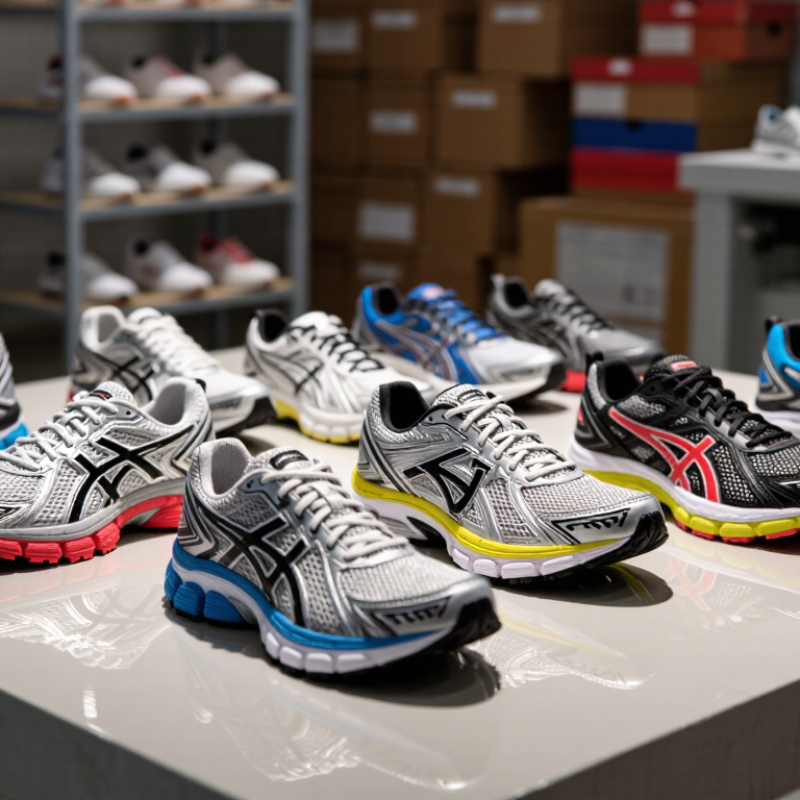
Who Are China Top Sports Running Shoes Suppliers?

China’s 55.5% Global Footwear Production Share and Supplier Landscape

Who Are China’s Top Sports Running Shoes Suppliers?

China remains a central force in athletic footwear manufacturing, producing an estimated 55.5% of the world’s footwear. This share reflects more than low production costs. It includes mature material networks, skilled assembly teams, mold workshops, and established export infrastructure. Running shoe suppliers are concentrated across several manufacturing areas, each with different strengths. Some specialize in lightweight mesh uppers, while others focus on rubber outsoles, cushioning systems, or private-label development. The map is broad.

A capable supplier usually offers OEM or ODM services, sample development, size grading, packaging, and quality inspection. Buyers should examine more than a polished product catalog. Factory capacity, worker training, material traceability, testing records, and delivery performance deserve direct questions. A useful audit checks stitching density, bonding strength, flex resistance, and outsole wear. Costs still matter. However, an unusually low quotation may hide weaker foam, unstable materials, or limited quality control.

The 55.5% figure also needs careful interpretation. It describes China’s production scale, not the ability of every factory to make technical running shoes. A supplier producing casual footwear may lack experience with impact protection or long-distance comfort. This distinction is easy to miss during early negotiations. Buyers should request recent samples, confirm production locations, and compare results from independent inspections. Digital communication helps, but it cannot replace physical sample review. Some supplier information may also be incomplete or outdated, so responsible sourcing requires repeated verification rather than one successful conversation.

China’s Footwear Manufacturing Share and Global Supplier Landscape

China produced 55.5% of the world’s footwear in 2023, making it the largest manufacturing base for footwear supply chains, including sports and running shoes. India, Vietnam, Indonesia, Brazil, and Türkiye were among the next largest production locations. Country-level footwear production is used as a broad supplier-capacity indicator and does not represent running-shoe production alone.

Source: World Footwear Yearbook 2024, global footwear production data for 2023.

Leading Chinese Running-Shoe Suppliers by Brand Scale and Export Reach

China’s top sports running-shoe suppliers differ sharply in scale, capability, and export reach. World Footwear Yearbook 2024 estimates that China exported about 9 billion footwear pairs in 2023. That represented roughly 62% of global footwear exports. The figure shows manufacturing depth, not automatic running-shoe expertise.

Large suppliers usually operate integrated factories for cutting, molding, stitching, and final testing. They can support wider size ranges, seasonal launches, and higher order volumes.

Mid-sized specialists often perform better with flexible development and smaller trial orders. Grand View Research valued the global running-shoe market at approximately 48.5 billion dollars in 2023. Its forecast also indicates continued growth through 2030.

Export reach matters here. A supplier shipping to Europe, North America, and Southeast Asia understands different labeling, testing, and packaging requirements.

Look beyond factory photographs. Request recent production records, audit reports, material test results, and shipment references. Check whether the quoted capacity covers running shoes, or all footwear combined. That distinction is important.

China Customs data confirms the country’s broad export strength, but customs categories rarely isolate technical running shoes. This creates a weakness in many supplier rankings. A large exporter may still lack reliable foam consistency or outsole durability. During sampling, inspect heel bonding, mesh recovery, and flex performance after repeated wear. Ask for corrective-action records. Honest suppliers should provide them, even when the answer is uncomfortable.

ANTA, Li-Ning, Xtep, and 361°: R&D, Sales, and Product Performance Data

China’s leading running-shoe suppliers are competing through research, retail scale, and measurable product improvements.

Four major Chinese sportswear groups reported combined revenue above RMB110 billion in their 2023 annual reports. Their disclosed R&D spending generally ranged from about 2% to 4% of annual sales. That investment supports carbon-plated racers, daily trainers, and lighter foam compounds.

Sales data also shows a clear channel shift. Online platforms remain important, while company-operated stores strengthen fitting advice and after-sales service. The China Sporting Goods Industry Federation reported continuing growth in China’s mass-participation running market in 2023. However, sales growth alone proves little. A supplier should publish foam density, shoe weight, outsole wear, and independent test methods. World Athletics’ 2024 technical rules also matter for competition-focused models, especially sole thickness and embedded components.

Product performance can vary sharply by runner. Laboratory rebound results may not match comfort after a 20-kilometre training run. This is where many supplier comparisons become imperfect.

I would request wear-test records from at least 30 runners, including pace, body weight, and mileage. Then compare cushioning loss after 300 kilometres, not only launch-day softness.

Tips:

Check the 2023 annual report, factory audit scope, and test standards. Ask for sample pairs from different production batches. A low price is useful, but inconsistent sizing can erase the saving.

OEM and ODM Factory Screening: ISO 9001, MOQ, Lead Time, and Capacity

Selecting China’s top sports running shoe suppliers requires more than comparing factory photos or low quotations. I examine ISO 9001 records, production experience, and quality control procedures. A valid certificate should match the factory’s legal entity and current production site. I also request recent audit reports, material inspection records, and sample testing data.

MOQ can reveal how flexible a factory really is. Some suppliers accept small trial orders but increase prices sharply. Others require high volumes before creating custom molds. I ask for separate MOQs for colors, sizes, materials, and packaging. Written answers matter. They prevent later confusion.

Lead time should include development, material sourcing, sampling, production, and final inspection. Capacity claims need practical evidence, such as monthly output, active lines, and worker shifts. I prefer visiting the workshop or arranging a live video inspection. A crowded cutting room may signal strong demand, but it can also indicate scheduling pressure. Capacity is not always available capacity.

My screening sheet is useful, but not perfect. A factory may pass document checks and still deliver inconsistent sizing. Therefore, I compare approved samples with pre-shipment samples. I record defect rates, correction speed, and communication quality. These details often separate a dependable OEM or ODM partner from a supplier that only sounds convincing. Ask difficult questions early. Mistakes become expensive after production starts.

Supplier Comparison by Materials, Cost, Testing Standards, and Quality KPIs

China’s leading running-shoe suppliers should be compared through measurable evidence, not factory size alone. Textile Exchange’s Materials Market Report 2024 estimates global fiber production reached 124 million tonnes in 2023. That makes recycled polyester, bio-based foams, and traceable rubber important sourcing factors. Ask suppliers for material composition, recycled content certificates, batch records, and foam density data. A lighter shoe is not automatically better. It may lose cushioning after repeated use.

Cost comparisons need equal specifications. Compare upper fabric weight, midsole density, outsole rubber percentage, packaging, tooling, testing, and minimum order quantity. A low quotation can become expensive after mold changes or rejected batches. Request a line-by-line cost sheet. Include landed cost and expected defect losses. Public market reports often provide broad footwear trends, but rarely reveal factory-level prices. That limitation deserves attention.

Testing should follow recognized methods and buyer-defined running conditions. ISO 17707 can support outsole abrasion testing, while ISO 2859-1 provides a structured sampling approach. World Athletics’ 2024 Competition and Technical Rules also show why sole thickness and construction details require careful verification. Useful quality KPIs include first-pass yield, defect rate per million pairs, bonding strength, flex-cycle survival, mass variation, and return rate. Set targets before production. I would not trust one laboratory report alone; independent retesting can expose inconsistent glue coverage, uneven foam, or size-to-size variation. Small flaws become visible quickly on a wet track.

FAQS

What share of global footwear production comes from China?

China produces an estimated 55.5% of the world’s footwear. This shows manufacturing scale, not universal technical expertise.

Why are Chinese running-shoe suppliers widely used?

They offer mature material networks, skilled assembly teams, mold workshops, and export infrastructure. Many suppliers also provide OEM, ODM, sampling, and packaging services.

Can every footwear factory produce technical running shoes?

No. A casual-footwear factory may lack experience with cushioning and impact protection. Ask for recent running-shoe samples. Do not rely on factory size alone.

What should buyers inspect during supplier evaluation?

Check stitching density, bonding strength, flex resistance, and outsole wear. Inspect the heel and toe areas closely. Small defects can grow during use.

Why can an unusually low quotation be risky?

It may reflect weaker foam, unstable materials, or limited quality control. The cheapest offer is not always the safest choice.

What documents and records should buyers request?

Request production records, audit reports, material test results, and shipment references. Ask for corrective-action records too. Honest answers may be imperfect.

How can buyers confirm a supplier’s real production capacity?

Ask whether the stated capacity covers running shoes or all footwear combined. Confirm production locations and review physical samples. Digital communication cannot replace this step.

How important is export experience?

Export experience can support different labeling, testing, and packaging requirements. Suppliers serving several regions may understand these variations better.

What do China’s export figures prove about running-shoe expertise?

China exported about 9 billion footwear pairs in 2023, roughly 62% of global exports. These figures show broad capacity, not automatic running-shoe capability.

Can supplier rankings always be trusted?

Not completely. Customs categories rarely isolate technical running shoes. Supplier information may also be outdated. Repeated verification remains necessary.

Conclusion

China accounts for approximately 55.5% of global footwear production, making it a major sourcing hub for Sports Running Shoes. This overview examines the country’s supplier landscape, from large-scale manufacturers with strong export capabilities to specialized factories serving international markets. It highlights how suppliers compete through research and development, product performance, production efficiency, and responsive customer service.

The article also explains how to screen OEM and ODM partners by reviewing ISO 9001 certification, minimum order quantities, lead times, production capacity, materials, testing procedures, and quality KPIs. By comparing cost structures, cushioning and upper materials, durability testing, and quality-control systems, buyers can identify reliable manufacturing partners that match their product positioning and market requirements. This practical framework supports more informed supplier selection and helps reduce sourcing risks.

Sophia

Sophia

Sophia is a dedicated marketing professional with an exceptional depth of knowledge about her company's products and services. With a keen understanding of market trends and customer needs, she crafts insightful blog posts that not only inform but also engage readers, enriching the company’s online......